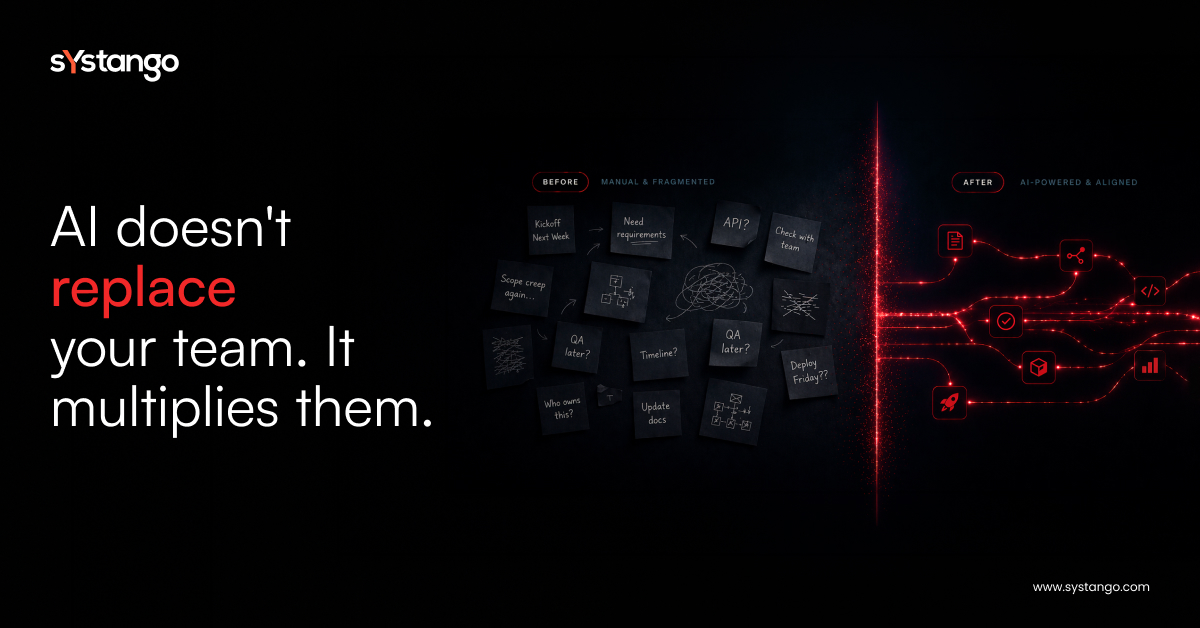


The ROI Reckoning: Why AI-Powered SDLC Is No Longer Optional for Businesses That Want to Win
A hard-headed commercial analysis of what AI in software development actually means for investment, risk, time, and competitive position
Key Takeaways
I. The Comparison That Changes the Conversation
II. The ROI Case – By the Numbers
III. Risk Reduction – The Commercial Case Nobody Talks About Enough
IV. Cost Optimisation – Where AI Changes the Maths
V. The Competitive Armour Argument
IV. Cost Optimisation – Where AI Changes the Maths
Every technology decision eventually comes down to a commercial question. And the commercial question facing technology leaders, CEOs, and boards in 2025 is no longer whether to adopt AI in software development. The evidence for AI’s impact on delivery outcomes is now overwhelming. The question is whether your organisation can afford to delay.
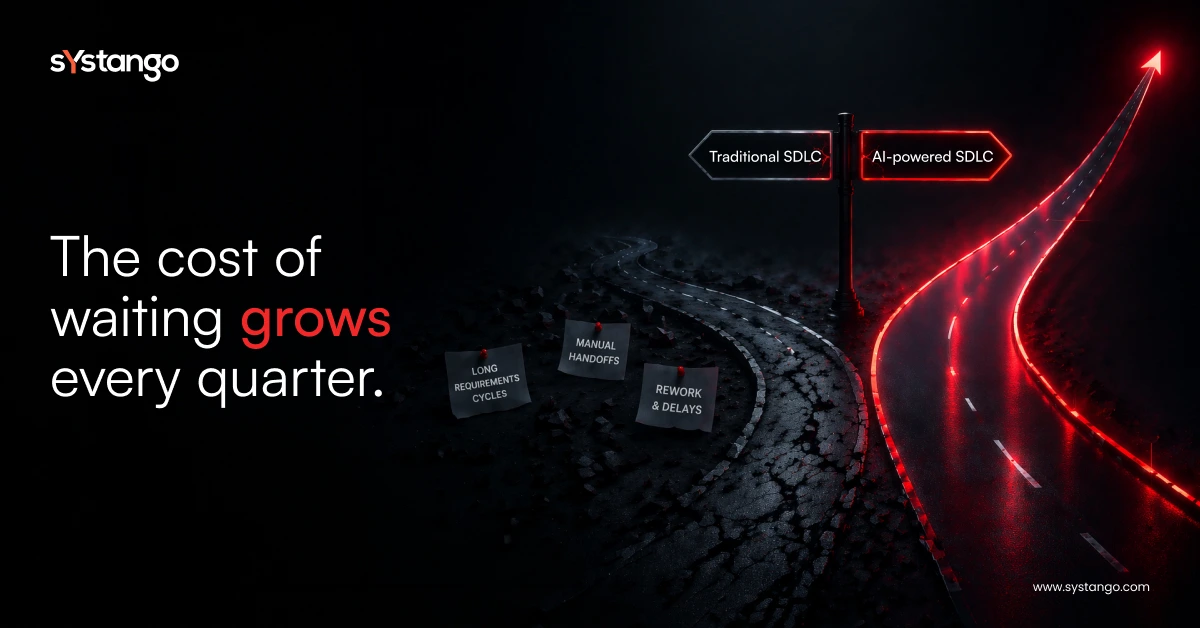
This final article in our three-part series sets aside the technical detail and makes the commercial case with clarity. We present the data, the comparisons, and the business logic that should inform your decision – because this is a decision, and the cost of making it slowly is rising every quarter.

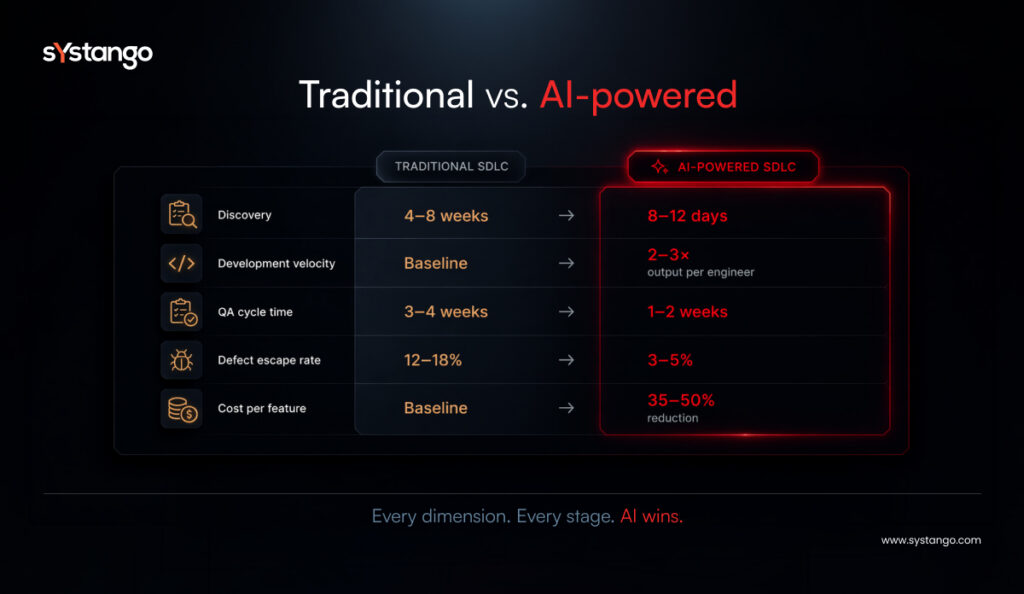
I. The Comparison That Changes the Conversation
The most useful frame for understanding AI’s commercial impact on SDLC is a direct, honest comparison between what traditional software delivery costs – in money, time, risk, and opportunity – and what AI-powered delivery costs. Below is that comparison, drawn from Systango’s delivery data and independently published research.
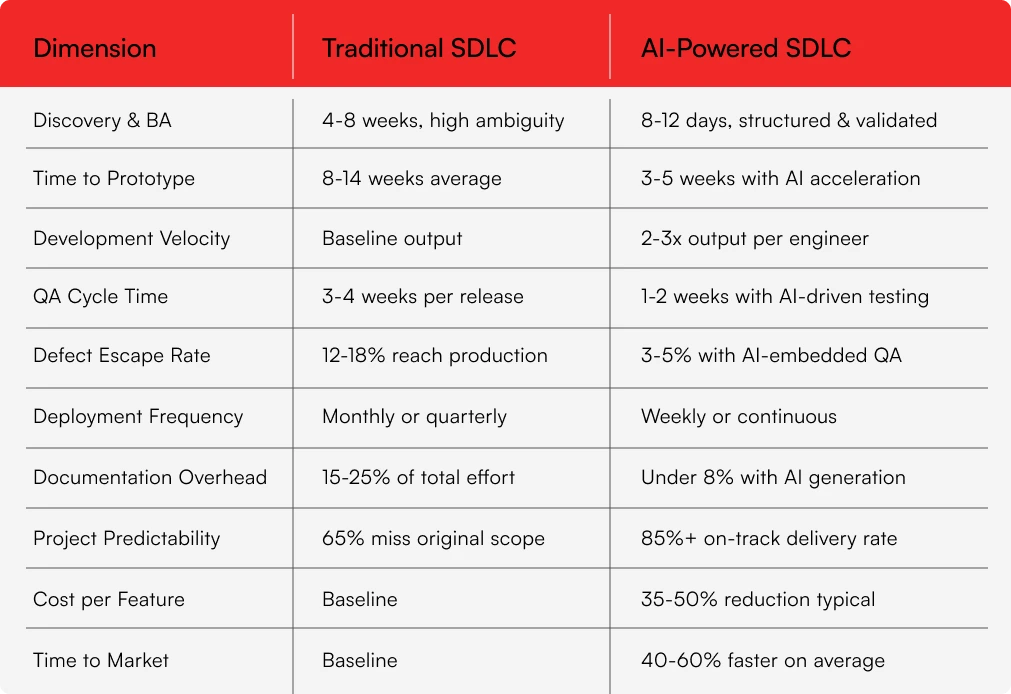
II. The ROI Case – By the Numbers
Return on investment in AI-powered SDLC operates across multiple dimensions simultaneously. Unlike most technology investments where benefit accrues in a single area, AI delivers compounding returns across cost, speed, quality, and risk – all at the same time.
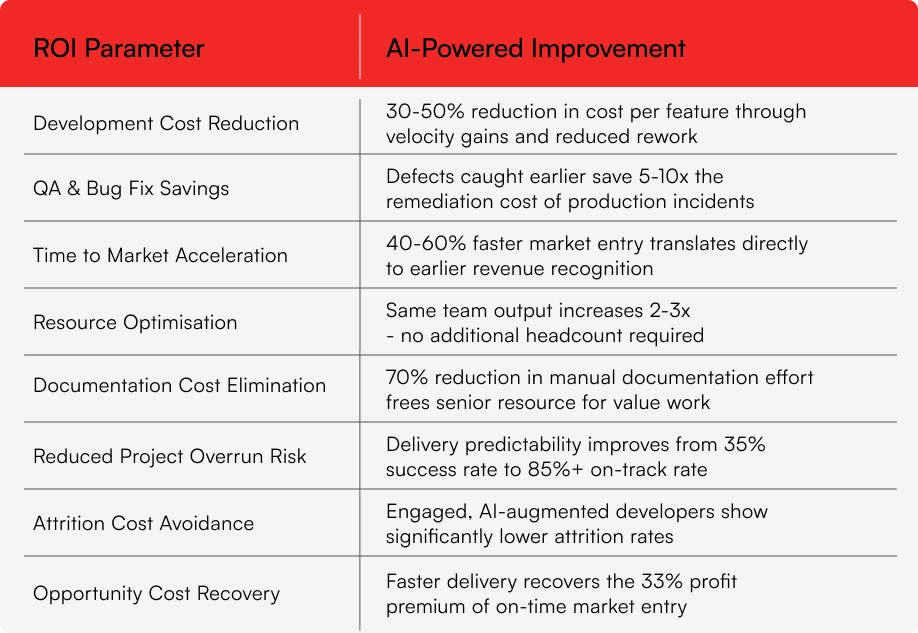
III. Risk Reduction – The Commercial Case Nobody Talks About Enough
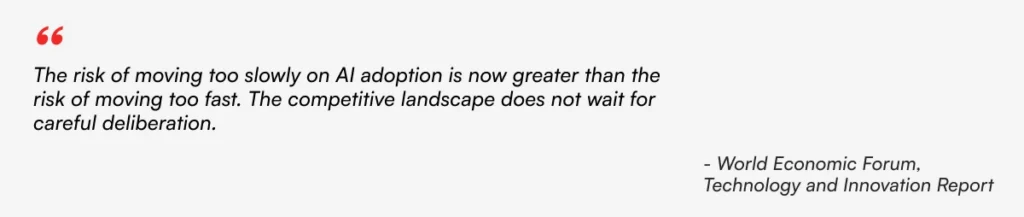
The ROI conversation in technology almost always focuses on cost and speed. But for boards and senior leadership teams, the most compelling commercial argument for AI-powered SDLC may be risk reduction.
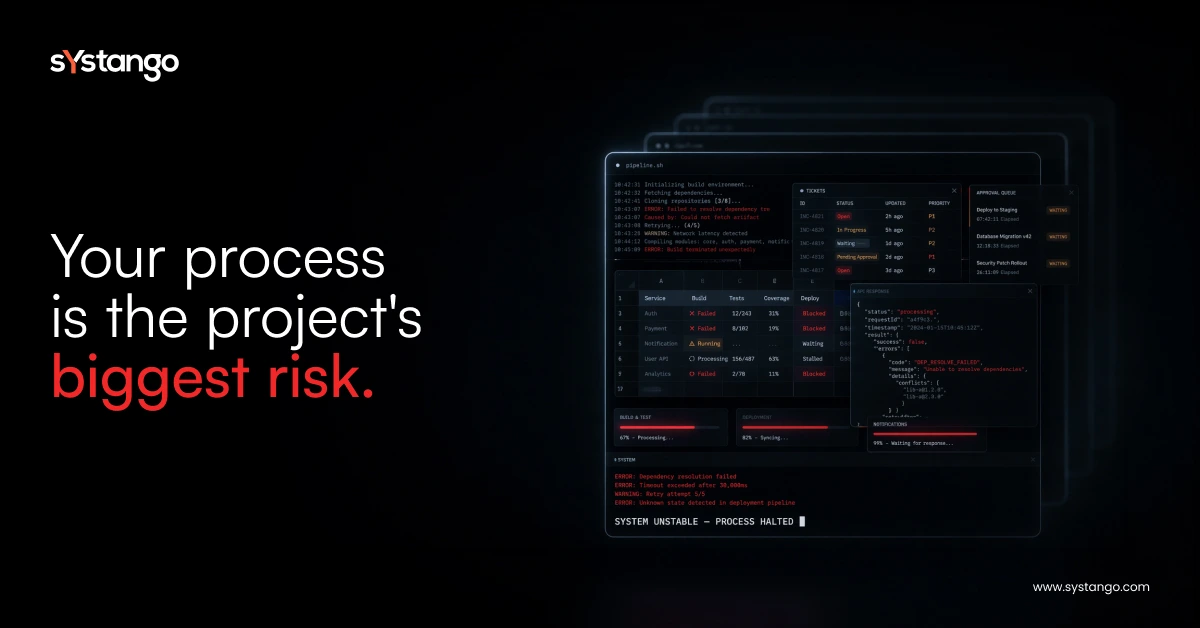
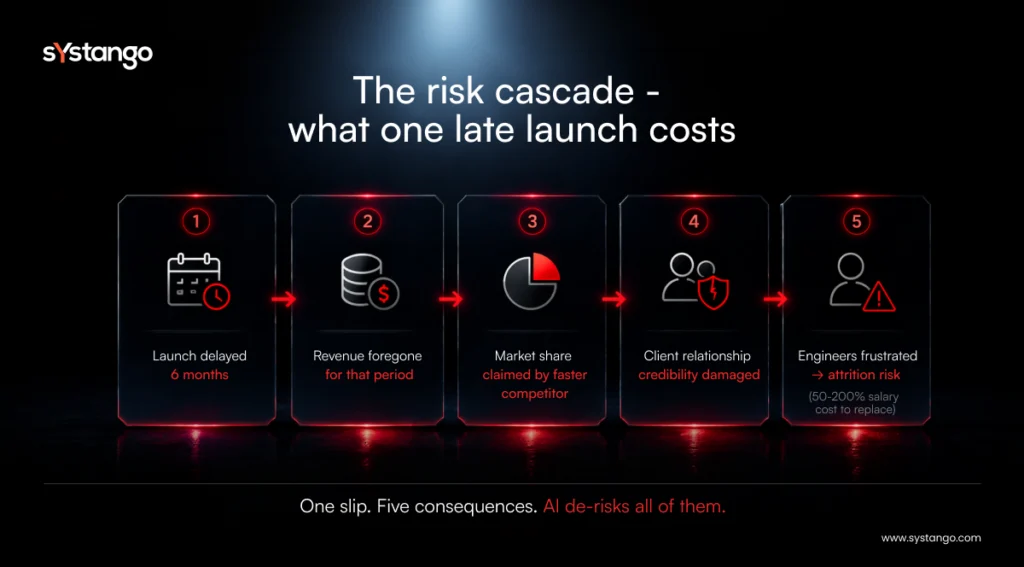
Traditional software development carries structural risk at every stage. Requirements risk – the danger that what is built does not match what was needed. Technical risk – the danger of defects, security vulnerabilities, and architectural decisions that create long-term liability. Delivery risk – the danger of timeline slippage that triggers contract penalties, damages client relationships, or allows competitors to move first.
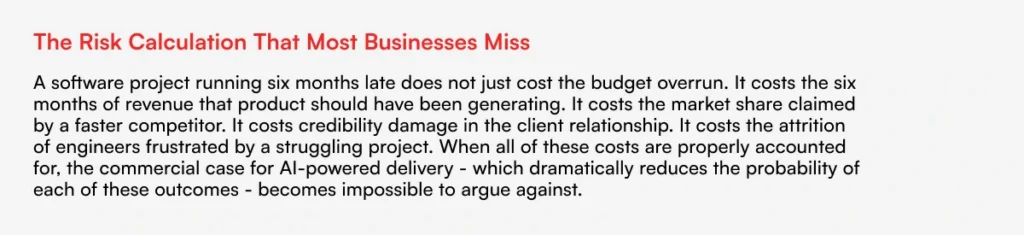
AI reduces risk systematically rather than incidentally. Automated requirements validation reduces requirements risk. AI-powered code review and continuous security scanning reduce technical risk. Predictive project analytics reduce delivery risk. At Systango, we have seen the cumulative effect of these risk reductions transform client confidence in our delivery commitments – and our ability to make those commitments with genuine certainty.
IV. Cost Optimisation Where AI Changes the Maths
1. The Staffing Model Transformation
Traditional SDLC scales through headcount. When a project needs to move faster, the default response is to add people. AI changes this equation fundamentally. An AI-augmented team of eight engineers can consistently outperform a traditional team of fifteen to twenty, not because the AI engineers work harder, but because AI eliminates the overhead, repetition, and rework that consumes the majority of traditional development effort.
For clients, this translates to lower project costs without any reduction in output quality or delivery velocity. For organisations building internal capability, it means getting significantly more from the engineering investment already made.
2.The Rework Elimination Dividend
Research consistently shows that rework – fixing defects, redesigning features, and addressing misunderstood requirements – consumes between 25% and 40% of total development effort in traditional SDLC environments. AI attacks this directly at every stage. Better requirements reduce development rework. AI code review reduces QA rework. Automated testing reduces production rework. Eliminating even half of this rework burden represents a substantial cost reduction across any material software programme.
3. Time Saving – The Compound Effect of Speed
Speed in software delivery is not linear in its business impact. The benefit of delivering a product two months earlier is not simply two months of additional revenue. It is two months of market learning that can be applied to the next iteration. It is two months of competitive positioning ahead of a rival still in development. It is two months of user feedback that validates or redirects the product roadmap.
Systango’s AI-accelerated delivery model consistently compresses timelines by 40% to 60% compared to traditional development approaches. For a programme that would traditionally take twelve months, this represents five to seven months of recovered time – and everything that five to seven months of earlier market presence means commercially.

V. The Competitive Armour Argument
Beyond the internal metrics of cost and time, AI-powered SDLC provides something that cannot be easily quantified but is commercially decisive: the ability to respond faster than competitors to market signals.
Organisations operating with AI-accelerated development capability can ship new features in weeks rather than quarters. They can respond to competitive moves, regulatory changes, and shifting customer expectations before traditional development organisations have finished their impact assessments. They can run more experiments, learn faster, and compound those learnings into product advantage at a rate that traditional SDLC simply cannot match.
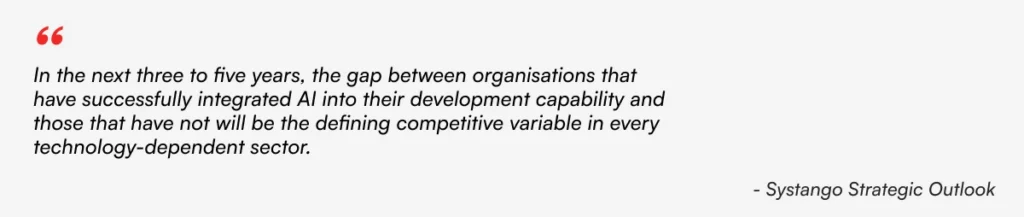
This velocity advantage is self-reinforcing. The organisations building AI-powered development capability now are not just moving faster today – they are accumulating the institutional knowledge, tooling maturity, and delivery process sophistication that will keep them ahead of competitors who delay this transition.
VI. The Decision Framework for Business Leaders
If you are a CEO, CTO, or board member evaluating this decision, here is the framework that should guide your thinking.
- What is our current cost of software delivery per output unit, and what would a 35–50% reduction mean for our technology budget?
- What would delivering our priority programmes six months earlier mean for revenue, market position, and competitive standing?
- What is the accumulated cost of our current defect escape rate, production incidents, and rework burden across the last twelve months?
- What is the talent retention risk if our engineering team continues to operate without the tools and processes that the best engineers now expect?
- What is the commercial cost of our competitors adopting AI-powered delivery while we deliberate?
These are not rhetorical questions. They are calculable, and for most organisations, the calculation produces a compelling and urgent answer.