

The robo advisor engineering bottleneck: how AI tools are creating more rework, not less
Key Takeways
1. The rework loop robo-advisor platforms cannot see in their sprint metrics
2. Three rework patterns draining robo-advisor engineering capacity
3. What breaks the engineering bottleneck: governance built into every inference
4. Where AI Workbench delivers inside robo-advisory and wealth management
5. Why the robo-advisor governance window is closing in 2026
6. Three audits to run on your robo-advisor AI this week
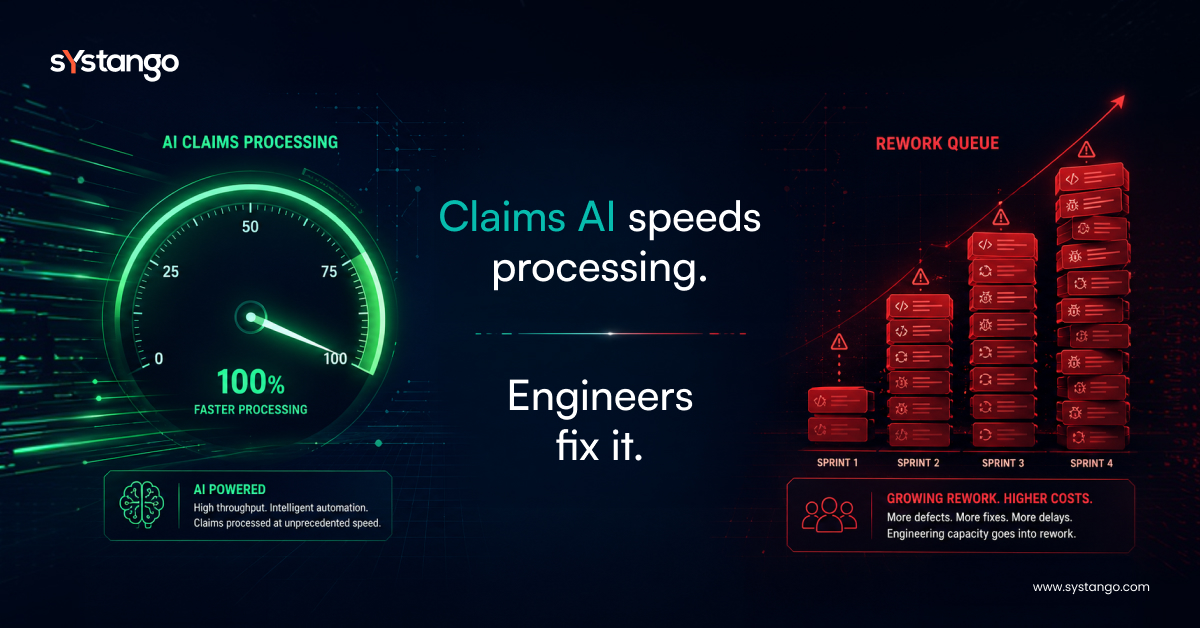
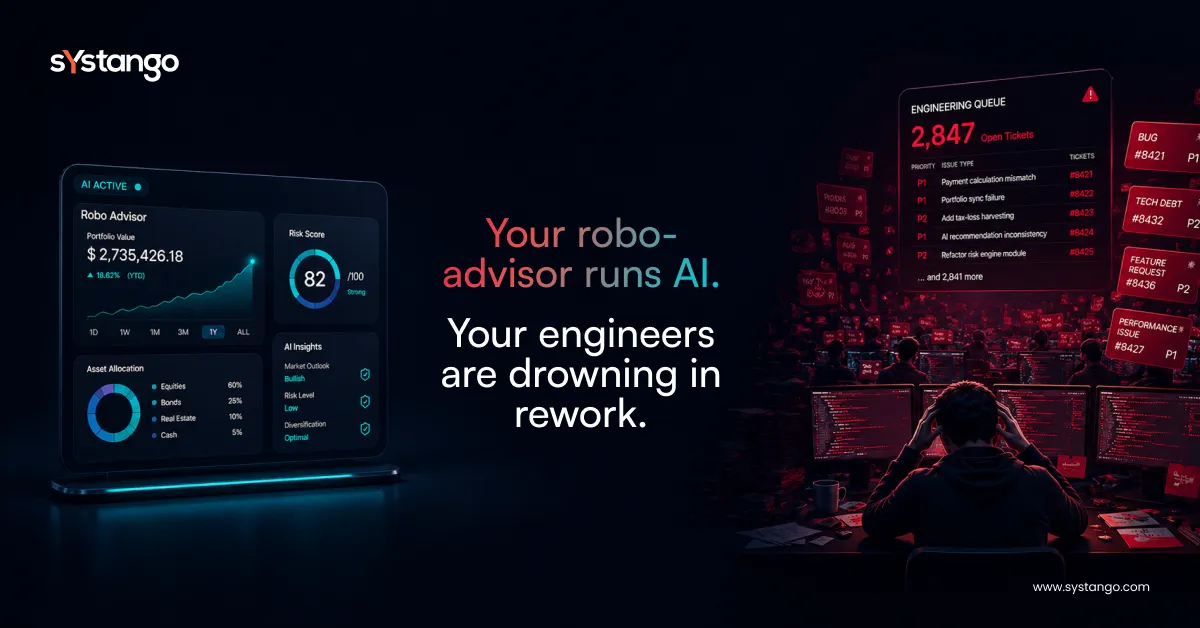
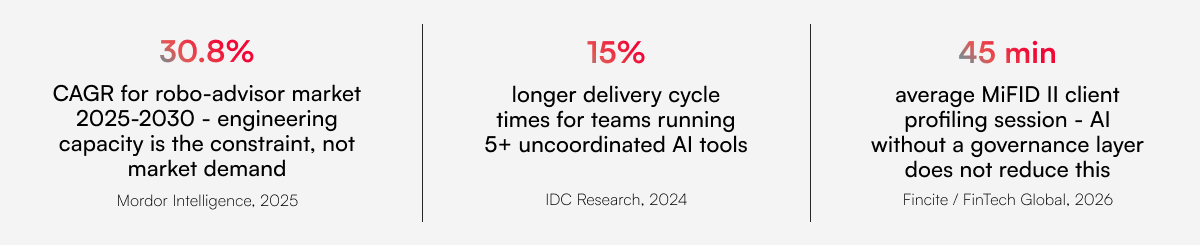
The robo advisor market is growing at 30.8% CAGR, according to Mordor Intelligence. The engineering teams are not. What is growing is the rework queue: AI tools produce code faster than compliance review can process it, generating suitability logic without the audit trail Reg BI and Consumer Duty require.

This is the task-level AI vs system-level AI problem - without a governance-first AI layer in the SDLC, the AI chaos tax compounds every sprint.
1. The rework loop robo-advisor platforms cannot see in their sprint metrics
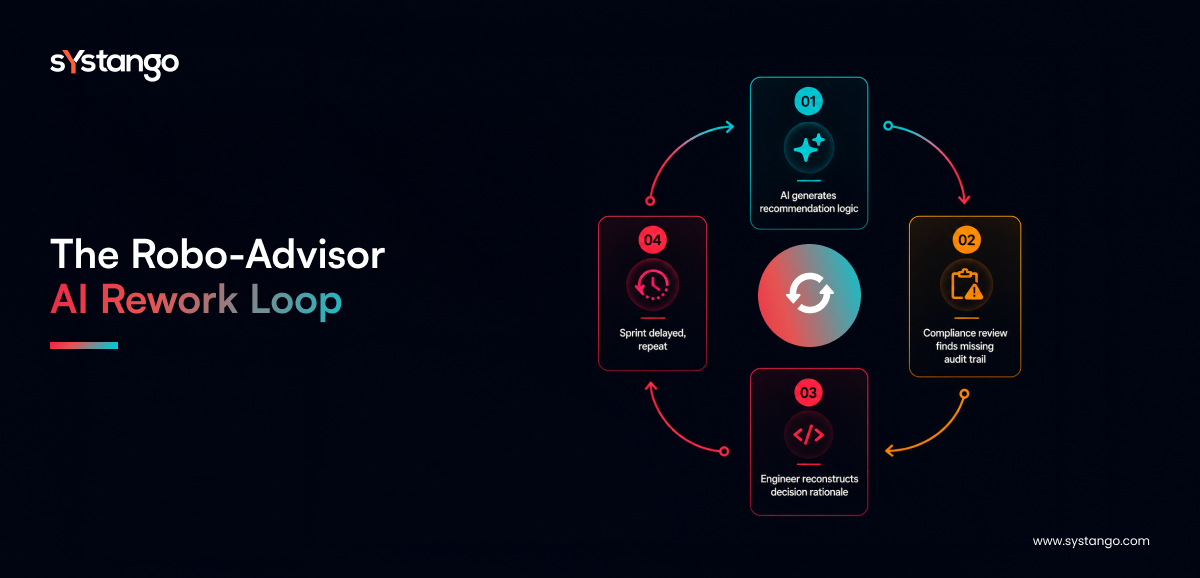
The bottleneck is not the AI model. It is the gap between what AI produces and what the platform needs to be defensible. Under Reg BI, Consumer Duty, and ESMA’s MiFID II guidance, every AI-assisted recommendation must be explainable, aligned with documented client risk tolerance, and auditable on demand. AI tools generate the logic. They do not generate the compliance documentation. That gap is paid in rework every sprint.
IDC’s research found that teams running five or more uncoordinated AI tools experience 15% longer delivery cycle times. For robo-advisor platforms without a shared governance layer across AI coding assistants, recommendation engines, and risk monitoring systems, that 15% compounds with compliance review overhead, producing the AI chaos tax in the exact function supposed to benefit most.
2. Three rework patterns draining robo-advisor engineering capacity
Bottleneck 1 - The explainability gap: AI recommends, but cannot explain why
ESMA’s MiFID II guidance requires AI tools to present information clearly and be transparent about the AI’s role in every decision. AI coding assistants generate the logic, but not client-readable rationale or confidence parameters. Every recommendation without this documentation requires manual reconstruction before it is defensible in an FCA or SEC examination.
Bottleneck 2 - The suitability rework cycle: Reg BI and Consumer Duty require alignment the AI does not check
SEC Reg BI and Consumer Duty both require AI-assisted recommendations to align with each client’s documented risk tolerance and investment profile. AI models produce recommendations from training data and market signals - they do not check suitability unless that check is built into the governance layer. The SEC’s 2024 AI washing enforcement actions make this a live regulatory risk.
Bottleneck 3 - The platform scale gap: a robo-advisor architecture that cannot handle AI-native volumes
AUM growth demands proportional increases in AI inference volume, compliance documentation, and real-time risk monitoring. Batch-processing architectures cannot deliver all three without proportional headcount. PwC projects nearly $6 trillion in AUM on AI-enabled platforms by 2027. Platforms capturing that growth will generate compliance documentation as a byproduct of inference - not an engineering task after every sprint.
3. What breaks the engineering bottleneck: governance built into every inference
Suitability alignment is built in at the inference layer
High-performing digital wealth management platforms encode regulatory constraints - client risk tolerance, MiFID II suitability, Consumer Duty, Reg BI - into the governance layer. Every inference produces suitability alignment documentation as a first-class output. The rework queue shrinks because documentation exists before it is requested.
Production monitoring that flags governance failures before they become examination findings
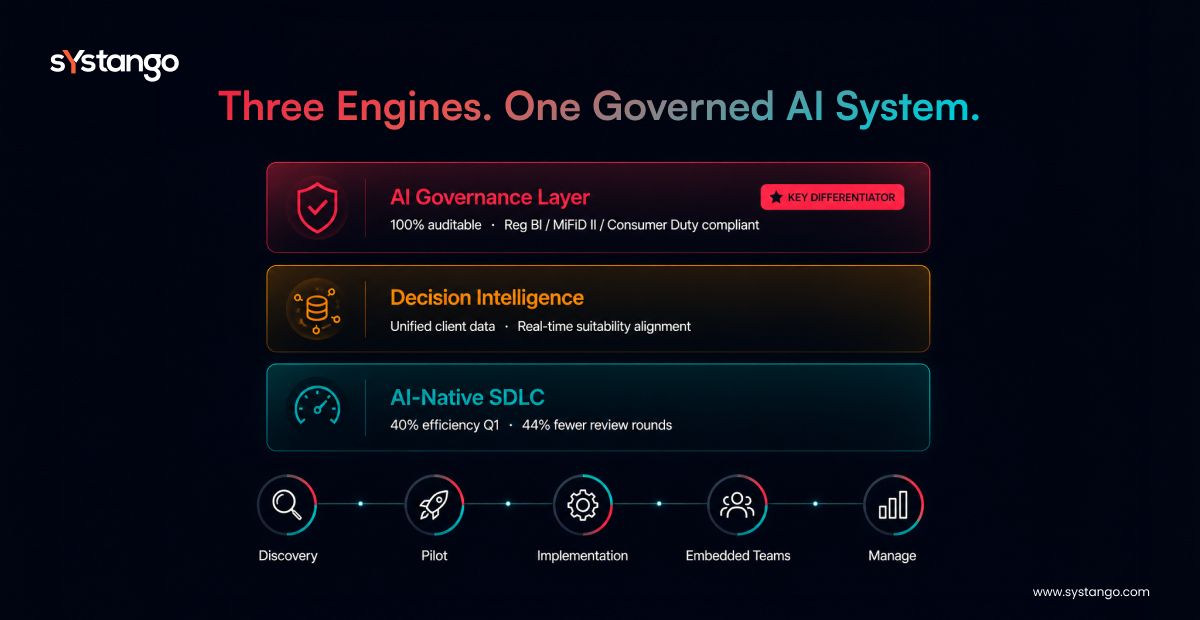
Real-time governance monitoring at inference - model drift detection, suitability alignment checks, and audit trail completeness. Based on Systango’s delivery data, this approach reduces code review rounds from 3.2 to 1.8 (44%) because the governance layer catches issues before they reach human review.
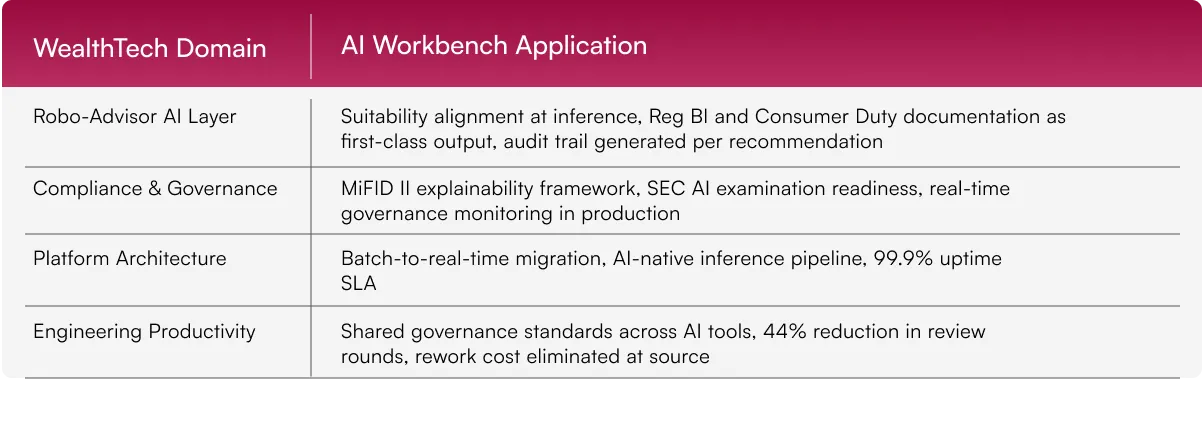
4. Where AI Workbench delivers inside robo-advisory and wealth management
5. Why the robo-advisor governance window is closing in 2026
The robo-advisor market reaches $54.7B by 2030, per Mordor Intelligence. Platforms capturing this growth will have AI infrastructure that produces compliance-ready output at inference speed. The SEC penalised two firms for AI washing in 2024, and its 2025 examination priorities explicitly include AI in portfolio management. The FCA’s Consumer Duty outcomes monitoring means AI-assisted recommendations that cannot produce outcome evidence on demand are a supervisory risk that compounds with every client interaction.
6. Three audits to run on your robo-advisor AI this week
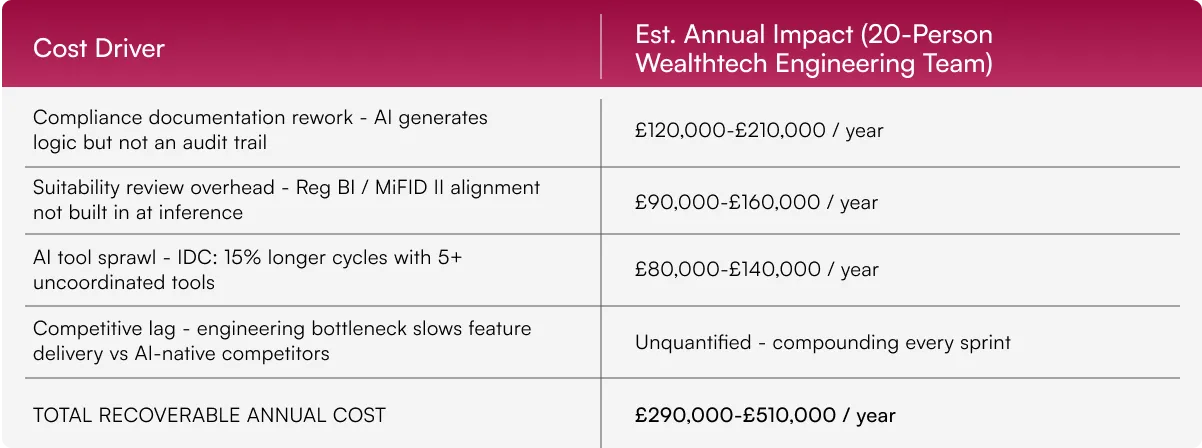
1. Check each AI-assisted recommendation: does it include client-readable rationale, suitability alignment, and a timestamped audit trail? If the answer is ‘we add that manually,’ calculate compliance reconstruction hours per sprint × engineering rate. That is your recoverable annual rework cost.
2. Count AI tools with no shared governance standards. More than four? IDC research finds teams in this situation run 15% longer delivery cycles. That is the AI chaos tax, calculable in an afternoon.
3. Map your suitability documentation workflow against Reg BI and Consumer Duty. Was suitability alignment produced at inference time or reconstructed afterwards? Reconstruction is the compliance retrofit cost you are paying every sprint.
About Systango
Systango is a publicly listed AI-native digital engineering company. We build governance-first AI systems for regulated FinTech, WealthTech, and InsurTech organisations in the UK and the US. From funded startups to enterprises including Google and Cisco, we are our customers’ technology partner - AI-native by design, governance-first by principle, outcome-accountable by default. Our CEO was one of the youngest VPs of Engineering at Goldman Sachs globally.