


Sustainable Cloud Computing with Google Cloud: Reducing Enterprise Carbon Footprints in 2026
Last Updated on: March 10, 2026

As organisations accelerate digital transformation, sustainability has become a defining factor in technology strategy. Businesses are under increasing pressure from regulators, investors, and customers to reduce environmental impact while maintaining operational growth. IT infrastructure, particularly data centres and compute workloads, represents a significant contributor to global carbon emissions.
Cloud computing is emerging as one of the most effective ways for organisations to reduce their environmental footprint. By consolidating infrastructure, improving resource efficiency, and leveraging renewable-powered data centres, cloud platforms enable companies to scale digital operations while lowering emissions.
Among cloud providers, Google Cloud has positioned itself as a global leader in sustainable cloud computing. Its renewable energy commitments, energy-efficient data centre architecture, and carbon measurement tools allow enterprises to align cloud adoption with ESG and net-zero strategies.
This guide explores how businesses can use Google Cloud sustainability services to reduce their cloud carbon footprint, implement environmentally responsible cloud architectures, and build long-term sustainability strategies for 2026 and beyond.
What’s Inside
I. Why Sustainable Cloud Computing Matters in 2026
II. What Is Sustainable Cloud Computing?
III. How Google Cloud Drives Sustainability in Business
IV. Measures for Reducing Carbon Footprint with Google Cloud
V. Sustainability Strategies: Best Practices for 2026
VI. Real-World Cloud Sustainability Use Cases
VII. Why Sustainability Matters for Business Growth
Key Takeaways
Sustainable cloud computing is becoming a strategic priority as organisations aim to reduce IT emissions while scaling digital operations. By migrating workloads to energy-efficient, renewable-powered infrastructure, enterprises can significantly lower their carbon footprint without compromising performance or innovation.
Platforms like Google Cloud enable businesses to measure, monitor, and optimise cloud emissions through tools such as the Carbon Footprint dashboard, autoscaling infrastructure, and AI-driven efficiency improvements. These capabilities allow organisations to align cloud operations with ESG goals and long-term net-zero strategies.
By combining sustainable cloud platforms with expert implementation and optimisation from Systango, enterprises can build cloud environments that deliver both operational efficiency and measurable environmental impact in 2026 and beyond.
I. Why Sustainable Cloud Computing Matters in 2026
Sustainability is no longer a “nice-to-have” initiative—it is a business imperative. Enterprises today face mounting pressure from regulators, investors, customers, and employees to reduce IT carbon emissions while continuing to scale digitally.
Traditional on-premise infrastructure is energy-intensive, under-utilised, and difficult to optimise. In contrast, sustainable cloud computing allows organisations to consolidate infrastructure, improve efficiency, and operate on cleaner energy sources.
As climate commitments, ESG reporting requirements, and net-zero targets accelerate globally, cloud adoption has become one of the most effective levers for reducing environmental impact—especially when paired with environmentally friendly cloud providers like Google Cloud.
II. What Is Sustainable Cloud Computing?
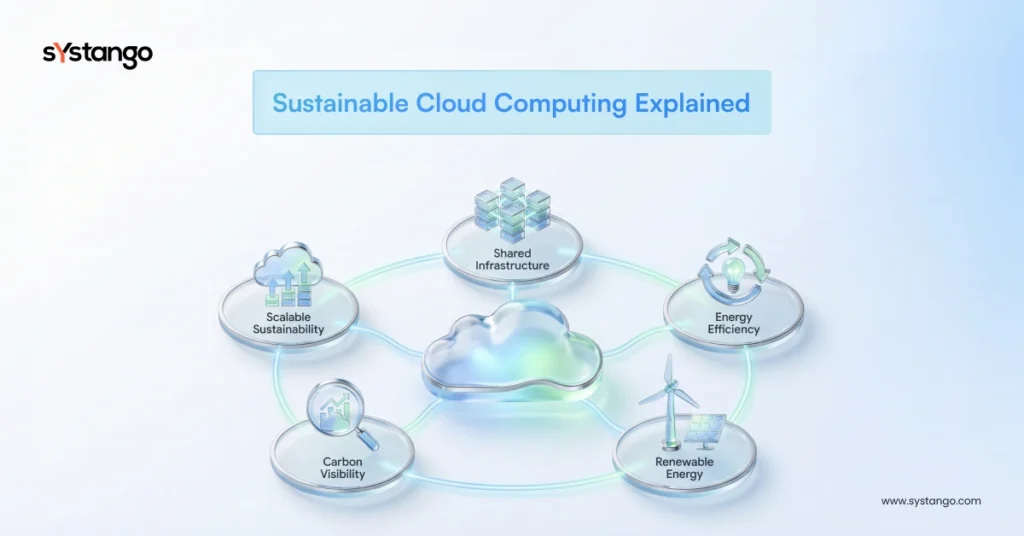
Sustainable cloud computing refers to designing, deploying, and operating cloud infrastructure in ways that minimise environmental impact while maximising efficiency, scalability, and business value.
In practice, it enables businesses to:
- Reduce energy consumption through shared, optimised infrastructure
- Lower emissions by using renewable-powered data centres
- Improve visibility into emissions via ESG reporting cloud carbon tools
- Align IT operations with long-term net-zero strategies
This makes cloud sustainability a strategic enabler—not just an operational upgrade.
III. How Google Cloud Drives Sustainability in Business
1. Google Cloud Renewable Energy Commitments
Google Cloud is widely recognised for its leadership in sustainability. Google has matched 100% of its global electricity consumption with renewable energy since 2017 and is working toward operating on 24/7 carbon-free energy by 2030.
By adopting Google Cloud sustainability services, enterprises automatically benefit from:
- Renewable-powered workloads
- Highly efficient, low-carbon infrastructure
- Continuous optimisation at hyperscale
This significantly reduces emissions compared to traditional data centres.
2. Energy-Efficient Cloud Infrastructure
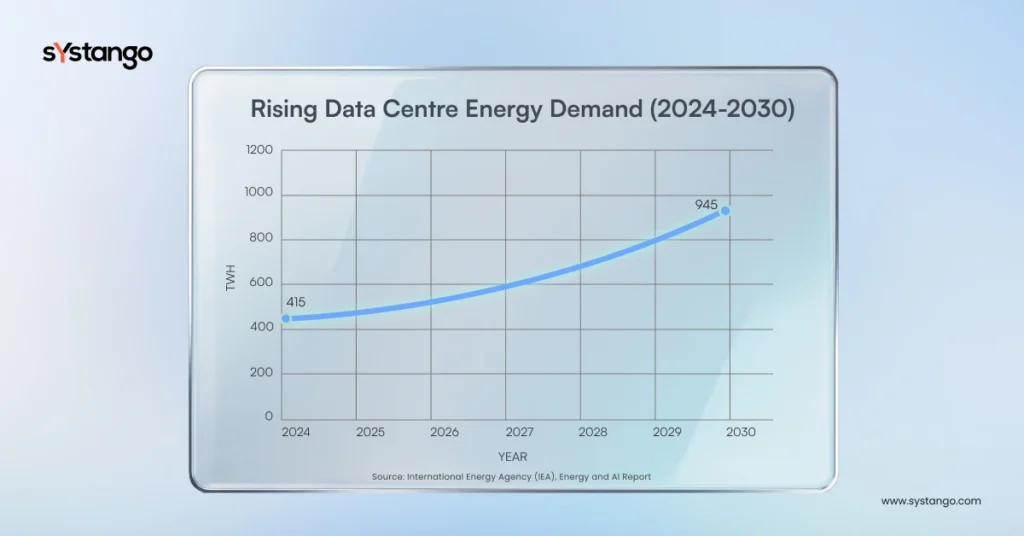
Data centres are major energy consumers globally. According to the International Energy Agency (IEA), electricity demand from data centres is expected to exceed 1,000 TWh by 2026, driven by AI and digital growth.
Google Cloud addresses this challenge through:
- Advanced AI-driven cooling systems
- Custom-built energy-efficient servers
- Industry-leading Power Usage Effectiveness (PUE)
These energy-efficient cloud solutions enable businesses to scale workloads without scaling emissions.
IV. Measures for Reducing Carbon Footprint with Google Cloud
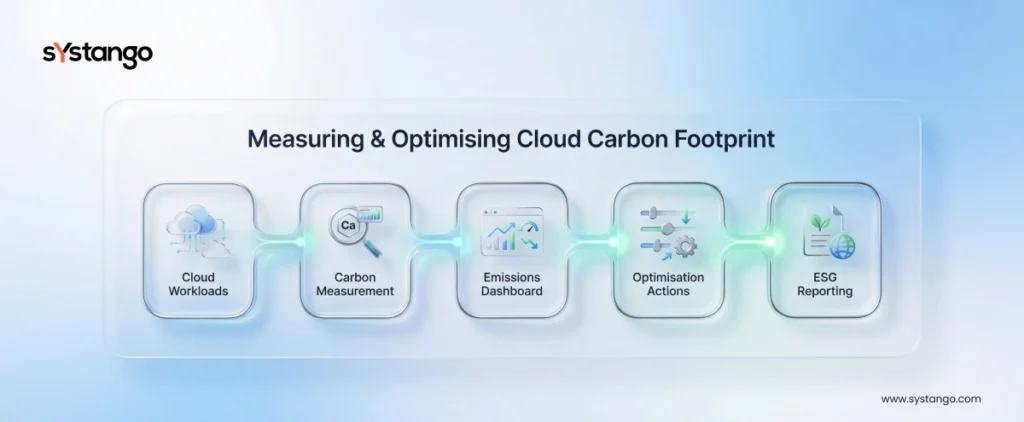
1. Google Cloud Carbon Footprint Tool
One of the most powerful enablers of cloud carbon footprint reduction is the Google Cloud Carbon Footprint tool.
This tool allows organisations to:
- Measure emissions linked to cloud usage
- Track carbon trends across projects and services
- Support carbon footprint reporting with Google Cloud
- Align IT data with ESG disclosures and sustainability audits
For enterprises navigating compliance and transparency, this visibility is critical.
2. Optimised Resource Utilisation
Google Cloud enables organisations to avoid over-provisioning by:
- Autoscaling compute and storage
- Rightsizing workloads
- Leveraging serverless and container-based services
This approach directly supports how cloud computing reduces carbon footprint by eliminating idle infrastructure and unnecessary energy consumption.
V. Sustainability Strategies: Best Practices for 2026
To build an effective cloud sustainability strategy 2026, enterprises should focus on:
- Cloud migration with sustainability goals
Align migration decisions with environmental KPIs, not just cost or performance. - AI-driven optimisation
Use analytics and machine learning to predict demand and reduce waste. - Renewable energy credits (RECs)
Offset unavoidable emissions and support renewable expansion. - Continuous emissions tracking
Integrate carbon metrics into operational dashboards. - Cloud governance & accountability
Tie sustainability to cloud cost management, security, and compliance frameworks.
These practices transform sustainability from a one-time initiative into a continuous improvement model.
VI. Real-World Cloud Sustainability Use Cases
1. Media & Publishing
The New York Times migrated to Google Cloud, significantly reducing energy consumption while improving scalability and digital delivery.
Retail & Supply Chain
2. Target leveraged Google Cloud analytics to optimise logistics and reduce transportation-related emissions.
Digital Platforms
3. Spotify uses Google Cloud’s machine learning services to improve efficiency and lower environmental impact across streaming infrastructure.
These examples highlight cloud sustainability use cases for businesses across industries.
VII. Why Sustainability Matters for Business Growth
Sustainability directly impacts:
- Brand reputation and customer trust
- Investor confidence and ESG scoring
- Talent attraction and retention
- Regulatory readiness
Organisations that align cloud computing and net-zero strategies gain a long-term competitive advantage while reducing operational risk.
Strategic Summary
Sustainable cloud computing is rapidly becoming a core component of enterprise digital strategy. By migrating workloads to energy-efficient infrastructure and leveraging renewable-powered data centres, organisations can significantly reduce the environmental impact of IT operations.
Platforms such as Google Cloud provide built-in sustainability advantages, including renewable energy sourcing, efficient data centre design, and tools like the Carbon Footprint dashboard that help enterprises measure and optimise emissions. Combined with modern cloud practices such as autoscaling, serverless computing, and workload optimisation, businesses can achieve meaningful carbon reductions while maintaining performance and scalability.
However, realising the full benefits of cloud sustainability requires thoughtful architecture, governance, and optimisation strategies. This is where Systango supports organisations in designing sustainable cloud environments that balance performance, cost efficiency, and environmental responsibility. By integrating sustainability metrics into cloud operations, enterprises can transform ESG commitments into measurable outcomes.
Conclusion
Sustainability is no longer separate from digital strategy—it is central to it. In 2026, businesses that prioritise sustainable cloud computing are better positioned to innovate responsibly, meet regulatory demands, and build long-term resilience.
With Google Cloud sustainability services, organisations gain access to energy-efficient infrastructure, transparent carbon reporting, and tools that turn sustainability into measurable business value.
At Systango, we help enterprises design and implement cloud strategies that balance performance, scalability, and environmental responsibility. From cloud migration to optimisation and governance, our experts ensure your sustainability goals are embedded into every layer of your cloud journey.
Executive Summary
Sustainable cloud computing is reshaping how organisations approach digital infrastructure. As ESG commitments and regulatory pressures increase, businesses are seeking technology solutions that enable growth while reducing environmental impact.
Cloud platforms such as Google Cloud help organisations achieve these goals by providing renewable-powered data centres, energy-efficient infrastructure, and advanced carbon measurement tools. Through features like autoscaling, resource optimisation, and carbon reporting dashboards, companies can reduce IT emissions while maintaining operational agility.
However, implementing a sustainable cloud strategy requires more than simply migrating workloads. It involves designing efficient architectures, aligning cloud operations with sustainability goals, and continuously monitoring carbon impact.
With expertise in cloud migration, optimisation, and sustainability-driven architecture, Systango helps enterprises build cloud environments that deliver both business performance and environmental responsibility. By embedding sustainability into cloud strategy, organisations can accelerate digital innovation while contributing to global climate goals.