


AWS vs Azure in 2026: Designing Multi-Cloud-Ready Business Architecture

Cloud decisions used to be operational.
In 2026, they are balance-sheet risks.
AI workloads are scaling aggressively. Regulatory scrutiny is intensifying across financial services and healthcare. Sovereign cloud mandates are expanding across Europe and beyond. Yet many enterprises still approach the aws vs azure 2026 debate as a feature comparison.
That is the real vulnerability.
The signal is clear.
This is no longer about picking a winner.
It is about designing infrastructure that remains adaptable under AI acceleration, regulatory shifts, and cost volatility.
What’s Inside
I. AWS vs Azure for Enterprise: The Strategic Lens
II. AWS vs Azure for AI Workloads
III. Regulated Industries: Compliance as Architecture
V. AWS vs Azure Cost Comparison 2026
VI. Data Residency & Sovereign Cloud Strategy
VII. Multi-Cloud Strategy 2026
Key Takeaways
- The aws vs azure 2026 debate has evolved into an architecture decision.
- AI workloads and regulatory pressure are accelerating multi-cloud adoption.
- Compliance alignment outweighs feature comparison.
- Cost optimisation requires cross-cloud leverage.
- Multi-cloud-ready architecture reduces long-term vendor lock-in risk.
I. AWS vs Azure for Enterprise: The Strategic Lens
When analysing aws vs azure for enterprise, the decision framework should include:
- Identity governance
- AI infrastructure maturity
- Global regulatory footprint
- Hybrid and multi-cloud extensibility
- Cost governance controls
AWS typically excels in ecosystem breadth and AI flexibility.
Azure often leads in Microsoft ecosystem integration and enterprise identity alignment.
But neither should be architected in isolation.
II. AWS vs Azure for AI Workloads
For organisations comparing aws vs azure for ai workloads, infrastructure maturity is decisive.
Modern AI environments require:
- AI-ready cloud infrastructure
- MLOps orchestration
- Cloud for generative AI scaling
- Zero trust cloud architecture
- Cloud security posture management
AI scaling is driving multi-cloud by necessity.
Azure offers deep Microsoft AI ecosystem integration.
AWS provides broader custom AI pipeline flexibility.
The most resilient architecture supports both.
For enterprises evaluating aws vs azure for fintech or blockchain infrastructure, portability and abstraction were key to scalability.
III. Regulated Industries: Compliance as Architecture
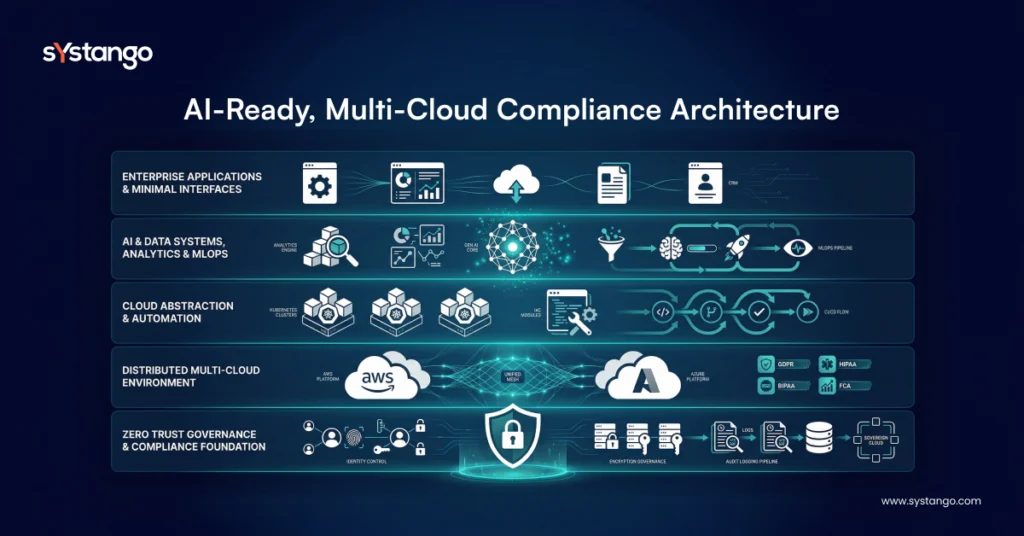
The aws vs azure compliance comparison conversation is often superficial.
Both providers support certifications across FCA, SEC, HIPAA, and GDPR.
However, organisations seeking the best cloud provider for regulated industry must design for:
- Jurisdictional data isolation
- Sovereign cloud model alignment
- Encryption key sovereignty
- Continuous audit logging
- Zero trust enforcement
Compliance resilience is architecture-driven — not vendor-driven.
IV. Business Proof
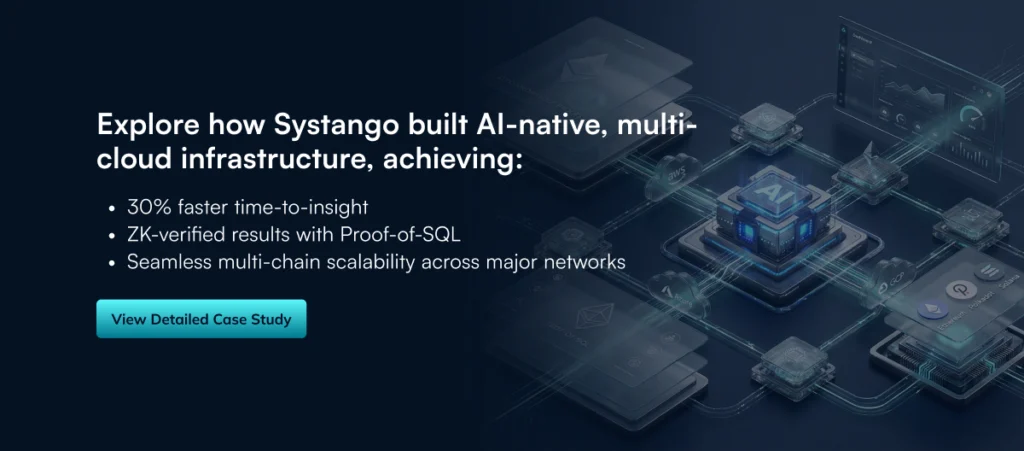
Systango engineered a migration delivering:
- 65% reduction in manual data handling
- 90% faster compliance reporting
- 2.5X scalability
- 50% faster feature deployment
Read the full case study here.
For regulated enterprises asking which cloud is best for regulatory compliance, governance design determines outcome.
V. AWS vs Azure Cost Comparison 2026
The aws vs azure cost comparison 2026 debate often ignores architecture impact.
Both platforms offer similar pricing models. Long-term cost efficiency depends on:
- Data egress optimisation
- Reserved capacity modelling
- AI GPU allocation
- Cloud cost optimisation strategy
- Multi-cloud negotiation leverage
Which cloud provider is cheaper long term?
The one that preserves leverage.
Portability reduces pricing dependency.
VI. Data Residency & Sovereign Cloud Strategy
For enterprises evaluating aws vs azure for data sovereignty, considerations include:
- GDPR compliance
- UK FCA requirements
- HIPAA enforcement
- EU sovereign cloud strategy
Multi-cloud architecture enables:
- Regional workload segmentation
- Cross-border compliance control
- Reduced geopolitical risk
Sovereignty is now strategic, not optional.
VII. Multi-Cloud Strategy 2026
A strong multi cloud strategy 2026 includes:
- Kubernetes-based abstraction
- Infrastructure as Code
- Cross-cloud CI/CD
- Hybrid cloud architecture
- Zero trust governance
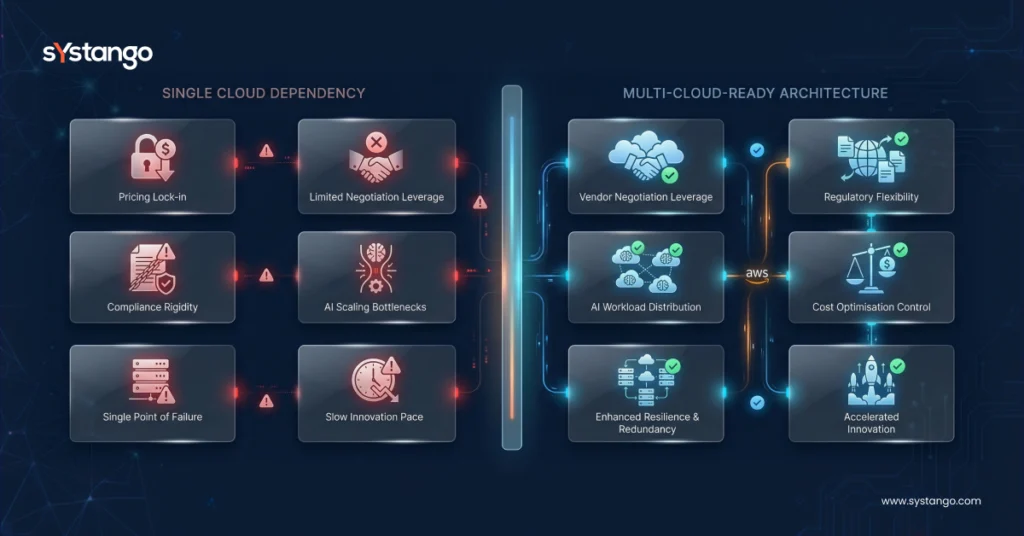
Single-cloud dependency limits leverage.
Multi-cloud preserves flexibility.
VIII. Risk of Inaction
Enterprises that design single-cloud locked environments risk:
- Vendor pricing dependency
- Regulatory rigidity
- AI capacity bottlenecks
- Migration complexity
- Reduced negotiation leverage
In 2026, infrastructure rigidity compounds risk annually.
IX. Why Systango
Systango designs:
- AWS-native environments
- Azure-integrated architectures
- Multi-cloud-ready deployments
- AI-optimised infrastructure
- Compliance-first cloud frameworks
Across AWS, Microsoft Azure, and Alibaba Cloud partnerships, we engineer globally scalable, compliance-aligned systems.
Need help choosing between AWS & Azure for your regulated or AI-driven business?
Strategic Summary
In 2026, comparing AWS and Azure requires more than service-level evaluation. Enterprises must assess AI-readiness, sovereign cloud requirements, regulatory obligations, and long-term cost optimisation strategy. Both providers support global compliance standards, but architecture determines resilience. Multi-cloud strategy is increasingly essential for AI workloads, regulated industries, and global expansion.
Systango designs AWS and Azure environments that are multi-cloud-ready by design — combining AI infrastructure engineering, compliance-first architecture, and cross-cloud portability to future-proof enterprise cloud strategy.
Conclusion
In 2026, the AWS vs Azure decision is no longer about choosing a single provider—it is about designing resilient, future-ready infrastructure.
Enterprises must move beyond feature comparisons and focus on architecture that supports AI scalability, regulatory compliance, and long-term cost optimisation. Both AWS and Azure offer enterprise-grade capabilities, but true competitive advantage lies in how effectively organisations design for portability, governance, and flexibility.
Multi-cloud is no longer optional. It is the foundation for reducing vendor lock-in, improving negotiation leverage, and enabling compliance across global markets.
Systango helps enterprises architect AI-ready, compliance-first, and multi-cloud-enabled environments across AWS and Azure—ensuring scalability, resilience, and long-term business value.
The real decision is not AWS vs Azure.
It is whether your cloud strategy is built to adapt, scale, and evolve.
Executive Summary
The aws vs azure 2026 decision is no longer about features or pricing alone. For CTOs, FinTech founders, and compliance leaders, cloud strategy now determines AI scalability, regulatory resilience, cost leverage, and vendor risk exposure.
AWS and Azure remain dominant global providers. However, Gartner forecasts that 75% of large enterprises will operate multi-cloud environments by 2027. The shift reflects a structural change: enterprises must architect for portability, sovereign data requirements, and AI-ready infrastructure.
When evaluating aws vs azure for enterprise, decision-makers must assess compliance alignment (FCA, SEC, GDPR, HIPAA), AI workload optimisation, cost governance, and long-term multi-cloud flexibility.
This guide moves beyond surface-level comparison. It outlines AI infrastructure considerations, regulated industry architecture, sovereign cloud strategy, cost optimisation frameworks, and real-world case studies.
The competitive edge in 2026 is not choosing AWS or Azure.
It is designing infrastructure that preserves optionality.